
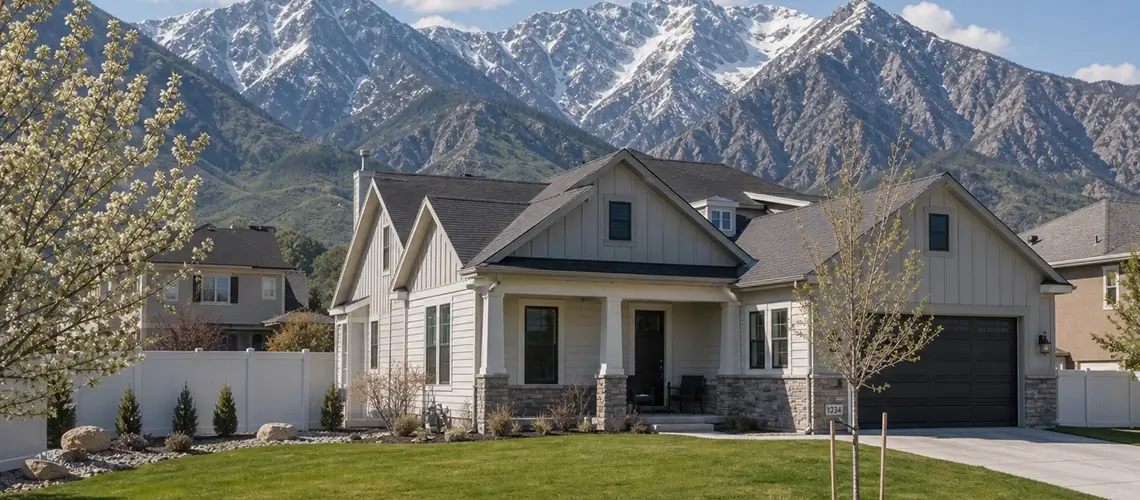
Utah’s four seasons bring a wide range of conditions that can affect Utah homeowners in ways that are easy to underestimate. Heavy snowfall and ice in winter, high winds and hail in spring, intense heat and wildfire risk in summer, and rapid temperature swings in fall all create real risks for homeowners across the state. Having the right insurance in place does not prevent these things from happening, but it does mean you are not absorbing those costs entirely on your own when something goes wrong. Understanding which risks your policy covers and which it does not is an essential part of being a prepared homeowner in Utah.
Winter Risks Utah Homeowners Should Know About
Utah winters create several types of damage that homeowners need to be aware of and prepared for. Ice dams form along roof edges when heat escapes through the roof, melts snow, and the resulting water refreezes at the cold eaves, eventually backing up under shingles and causing interior water damage. Frozen and burst pipes are another common winter issue, particularly in homes where pipes run along exterior walls or in unheated spaces.
Spring and Summer Risks for Utah Homeowners
Spring in Utah brings high winds and occasional hail to many parts of the state, both of which can cause significant damage to roofing, siding, and windows. Summer brings extended periods of intense heat that can stress roofing materials and HVAC systems beyond their design limits. Wildfire risk is a growing and serious concern in certain Utah communities, particularly during the late summer months when conditions are driest. The Be Ready Utah hazard awareness guide offers detailed guidance on what Utah families should know about hazards in our region.
What Standard Policies Cover and Where They Fall Short
Standard homeowners policies cover a broad range of weather-related damages, but they have notable and important exclusions that catch many homeowners off guard. Flood damage, whether from spring snowmelt runoff, heavy rainfall, or overflowing waterways, is almost universally excluded from standard homeowners policies and requires a separate flood insurance policy to be covered. Earthquake damage, which is a relevant risk in parts of Utah given the state’s seismic history, is similarly excluded from standard coverage.
Making Sure Your Coverage Keeps Up With Utah’s Climate
We help Utah homeowners review their existing coverage and identify any seasonal gaps that have developed over time or that were never addressed when the policy was first set up. If your property has elevated exposure to specific risks based on its location, its age, or how it is constructed, we can help you identify the endorsements or separate policies that fill in what your standard coverage does not. Staying ahead of these gaps before a seasonal event occurs is far better than discovering them during a claim.
If you want to make sure your Utah home is properly covered through every season, contact us. We will review your policy and help you address any gaps before they become a problem.